

Why use loading ramps? Learn about solo motorcycle loading physics, safety with self-locking worm drives, and high-strength structural alloys.
Every year, thousands of American and European riders struggle with the same challenge: finding a cost-effective way to load their motorcycles, often solo, onto pickup trucks without risking injury or damage. The search for safe, reliable loading ramps is especially important for those with bikes under 300kg who want effortless transport and peace of mind. With over 60 percent of solo motorcycle owners transporting their bikes themselves, understanding the right ramp makes all the difference for everyday riders who care about both safety and savings.
Table of Contents
- Defining Motorcycle Loading Ramps And Their Purpose
- Physics Of Solo Motorcycle Loading Explained
- Self-Locking Safety: Preventing Runaway Bikes
- Structural Strength: 6063-T5 Alloy Vs Store-Bought Ramps
- Loading Ramp Use Cases For Truck Owners
- Risks Of Improvised Or Inadequate Loading Solutions
Key Takeaways
| Point | Details |
|---|---|
| Motorcycle Loading Ramps | These ramps facilitate the safe transport of motorcycles between ground level and elevated platforms, minimizing the risk of injury. |
| Safety Features | High-quality loading ramps include non-slip surfaces and self-locking mechanisms to enhance user safety during loading. |
| Material Considerations | Ramps made from 6063-T5 aluminum alloy offer superior strength-to-weight ratios compared to generic options, ensuring reliability and safety. |
| Importance of Proper Equipment | Using makeshift loading solutions poses significant risks; always choose purpose-built ramps designed for motorcycle transport to prevent accidents and injuries. |
Defining Motorcycle Loading Ramps and Their Purpose
Motorcycle loading ramps are specialized equipment designed to safely transport two-wheeled vehicles between ground level and elevated platforms like truck beds or trailers. These precision-engineered tools solve a critical challenge for riders: moving motorcycles weighing hundreds of pounds without requiring multiple people or risking personal injury.
Loading ramps come in multiple configurations, each tailored to specific transportation needs. Motorcycle loading gear typically includes single-piece, bi-fold, and tri-fold designs that provide varying levels of portability and weight capacity. The primary function remains consistent: creating a stable, controlled pathway that allows motorcyclists to smoothly transition their vehicle from ground to transport platform.
The engineering behind modern loading ramps focuses on three critical elements: stability, weight distribution, and user safety. High-quality ramps feature reinforced aluminum construction, non-slip surfaces, and integrated locking mechanisms that prevent unexpected movement during loading. These design considerations transform what could be a dangerous manual task into a manageable, solo-friendly operation for riders across different skill levels and vehicle types.
Pro tip: Before purchasing a motorcycle loading ramp, always verify its weight rating matches or exceeds your specific motorcycle’s total weight to ensure safe, reliable transportation.
Physics of Solo Motorcycle Loading Explained
The physics of solo motorcycle loading revolve around understanding and managing complex mechanical forces during vehicle transportation. Motorcycle loading mechanics depend on precise balance, leverage, and strategic weight distribution to transform a potentially dangerous task into a manageable solo operation.
Gravitational forces play a critical role in loading dynamics. As a motorcycle moves up an inclined ramp, the rider must counteract two primary forces: gravity pulling downward and the motorcycle’s inherent momentum. The ramp’s angle directly influences the required physical effort - a steeper angle increases gravitational resistance, while a more gradual incline reduces the force needed to move the motorcycle upward. Weight distribution strategies become essential in maintaining control and preventing potential slippage or loss of balance.
Successful solo loading requires understanding three fundamental mechanical principles: center of gravity management, friction coefficient, and momentum control. Riders must strategically position their body weight, use precise steering techniques, and maintain a consistent, controlled speed. Specialized loading ramps incorporate design features like textured surfaces, side rails, and weight-rated materials to enhance stability and reduce the physical effort required during the loading process.
Pro tip: Practice loading your motorcycle on a flat surface first to develop muscle memory and understand your bike’s weight distribution before attempting actual transportation.
Self-Locking Safety: Preventing Runaway Bikes
Solo motorcycle loading presents inherent risks, particularly the potential for an uncontrolled bike rollback that could cause significant damage or personal injury. Automated loading safety systems have emerged as a critical solution to mitigate these risks, incorporating sophisticated mechanical mechanisms that prevent unexpected movement.
The core principle of self-locking technology involves creating multiple fail-safe points that restrict a motorcycle’s unintended motion. Advanced ramps utilize precision-engineered locking mechanisms with integrated friction controls and mechanical latches that engage automatically when weight is applied. These systems work by creating resistance points that effectively counteract gravitational forces, ensuring the motorcycle remains stationary at any point during the loading process - whether the rider is midway up the ramp or pausing to adjust positioning.
Engineering design plays a crucial role in preventing runaway scenarios. Sophisticated self-locking ramps incorporate features like worm drive mechanisms, which create a one-way mechanical advantage that prevents backward rolling. Unlike traditional ramps that rely solely on rider strength and balance, these advanced systems provide a mechanical fail-safe that can hold a motorcycle’s entire weight without slipping, dramatically reducing the physical and mental strain on the loader.
Pro tip: Always test your ramp’s self-locking mechanism with minimal motorcycle weight first to understand its engagement and release dynamics before attempting a full load.
Structural Strength: 6063-T5 Alloy vs Store-Bought Ramps
Not all motorcycle loading ramps are created equal. The fundamental difference lies in material engineering, with aluminum alloy performance representing a critical factor in ramp reliability and user safety. Professional-grade ramps constructed from 6063-T5 aluminum alloy offer a superior alternative to generic store-bought options, providing an optimal balance between structural integrity and weight management.
The 6063-T5 aluminum alloy represents a precision-engineered material specifically designed for high-stress applications. Unlike standard hardware store ramps, this architectural-grade alloy delivers remarkable strength-to-weight characteristics. It provides 30-50% weight reduction compared to traditional steel ramps while maintaining exceptional load-bearing capacity, making it ideal for solo motorcycle loading scenarios where equipment portability and robust performance are paramount.
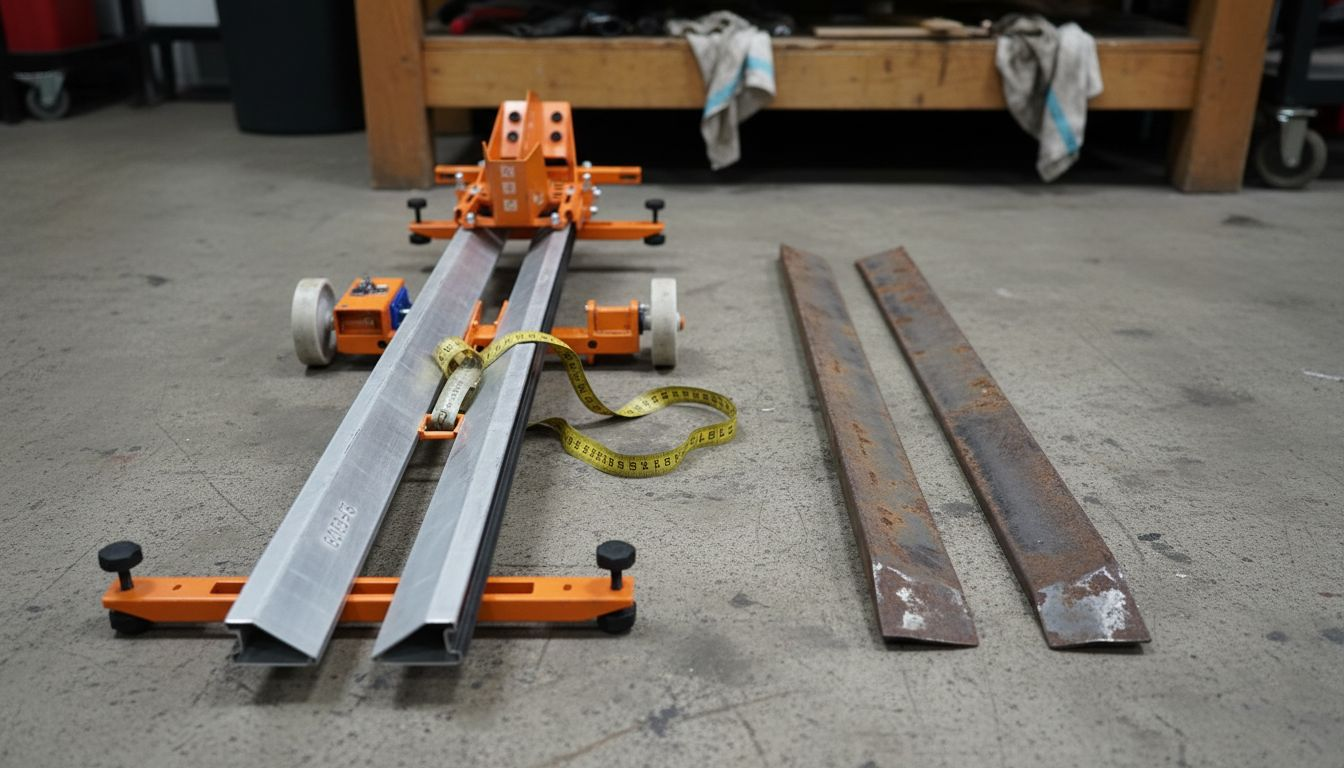
Quality differentiates professional ramps from generic alternatives. Store-bought ramps often utilize lower-grade aluminum or inconsistent manufacturing processes, resulting in unpredictable structural performance. In contrast, 6063-T5 alloy ramps feature enhanced corrosion resistance, superior thermal stability, and precisely controlled metallurgical properties that ensure consistent load distribution and minimal flexing under motorcycle weight. These engineering nuances transform loading from a potentially risky operation into a controlled, predictable process.
Here’s a quick reference comparing key materials used in motorcycle loading ramps:
| Material Type | Strength-to-Weight Ratio | Corrosion Resistance | Typical Use Cases |
|---|---|---|---|
| 6063-T5 Aluminum | Very high (lightweight) | Excellent | Professional, heavy motorcycles |
| Standard Aluminum | Moderate | Good | Generic store-bought ramps |
| Steel | Highest, but heavy | Low | Industrial, not portable |
| Wood | Very low | Poor | Makeshift, unsafe solutions |
Pro tip: Inspect your ramp’s material specifications carefully, focusing on aluminum grade and heat treatment to ensure reliable structural integrity before purchasing.
Loading Ramp Use Cases for Truck Owners
Truck owners encounter unique challenges when transporting motorcycles, with motorcycle loading strategies playing a critical role in safe vehicle transportation. The variation in truck bed heights, lengths, and configurations demands specialized loading equipment that can adapt to different vehicle geometries while ensuring motorcycle stability and operator safety.
Short-bed pickup trucks present particularly complex loading scenarios. These vehicles require longer ramps with more gradual inclines to prevent motorcycle bottoming out or tipping during loading. The ramp’s length becomes crucial in managing approach angles, with professional-grade ramps engineered to compensate for reduced truck bed clearance. Factors like ramp width, weight capacity, and surface texture become essential considerations for truck owners seeking reliable motorcycle transport solutions.
Beyond basic transportation needs, motorcycle loading ramps serve multiple functional purposes for truck owners. They enable efficient loading for maintenance, storage, long-distance travel, and recreational purposes. Professional ramps with features like side rails, adjustable positioning, and robust material construction transform what could be a challenging manual process into a streamlined, controlled operation. The right loading ramp effectively becomes an extension of the truck’s utility, providing a safe, predictable interface between motorcycle and transport vehicle.
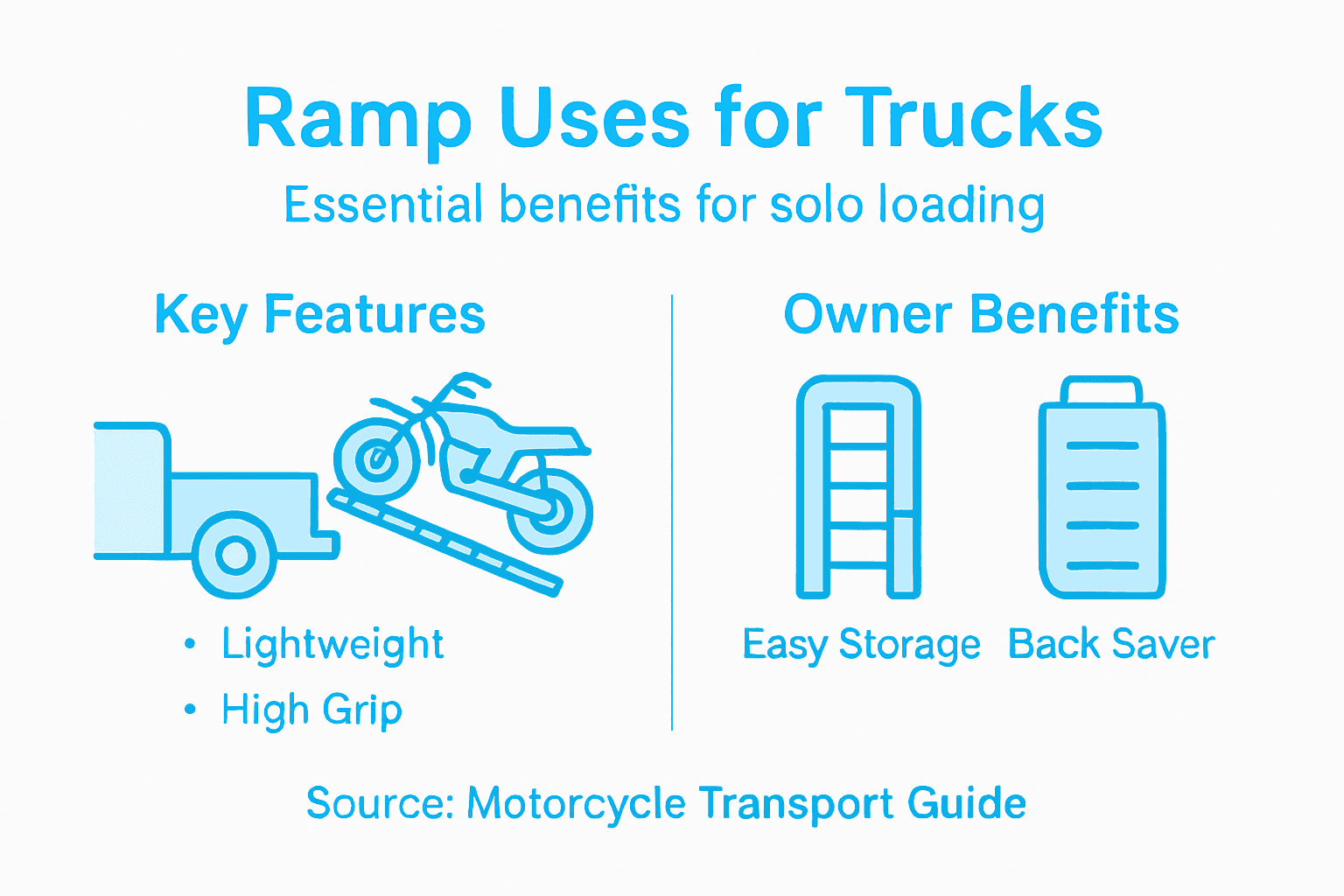
For truck owners, these loading ramp features address specific transportation challenges:
| Ramp Feature | Addresses Issue | Benefit for Truck Owners |
|---|---|---|
| Extra Length | High truck beds | Prevents bottoming out |
| Non-slip Surface | Wet or dirt conditions | Improved vehicle control |
| Adjustable Position | Bed size variation | Universal fit, stability |
| Side Rails | Narrow ramps | Prevents bike tipping |
Pro tip: Measure your truck bed height and motorcycle ground clearance before selecting a loading ramp to ensure optimal compatibility and safe loading.
Risks of Improvised or Inadequate Loading Solutions
Motorists who rely on makeshift or improperly designed loading equipment expose themselves to substantial safety risks that extend far beyond simple inconvenience. Motorcycle loading hazards represent a critical safety concern, where improvised solutions can transform a routine transportation task into a potentially catastrophic scenario.
Inadequate loading equipment demonstrates multiple failure points that compromise both rider safety and motorcycle integrity. Wooden planks, unrated metal sheets, or homemade ramps lack critical engineering features like load-bearing capacity, surface traction, and structural stability. These improvised solutions frequently fail under the motorcycle’s weight, creating sudden collapse scenarios that can result in significant personal injury and expensive equipment damage. Professional loading ramps incorporate precise engineering tolerances, non-slip surfaces, and weight-rated materials specifically designed to manage the complex dynamics of motorcycle transportation.
The consequences of using inappropriate loading solutions extend beyond immediate physical risks. Insurance companies often reject claims involving accidents caused by substandard equipment, leaving riders financially vulnerable. Professional loading ramps provide documented load ratings, engineered attachment mechanisms, and standardized safety features that create a predictable, controlled loading environment. By eliminating variables and potential failure points, these purpose-built tools transform a high-risk activity into a manageable, controlled process that protects both the rider and the motorcycle.
Pro tip: Always verify a loading ramp’s weight capacity and compatibility with your specific motorcycle model before attempting any loading procedure.
Experience Safe Solo Motorcycle Transport with Alien Ramp
The challenge of loading your motorcycle safely and alone calls for a solution that combines stability, strength, and convenience. This article highlights key pain points like controlling your bike’s weight distribution, preventing rollbacks with self-locking safety, and relying on strong materials such as 6063-T5 aluminum alloy. At Alien Ramp, we understand these concerns deeply and have engineered our Self-Loading Ramps – Alien Ramp to address them perfectly using our patented One-Man Loading System™ technology powered by a cordless drill.

Don’t settle for unreliable or makeshift ramps that put you and your motorcycle at risk. Choose a ramp built for solo riders that offers exceptional structural strength, ease of use, and proven safety features. Visit Alien Ramp today to explore our range and secure your peace of mind. Complete your setup with precision accessories available at Alien Ramp Accessories and experience loading freedom designed for professionals and everyday riders alike. Act now to transform your solo loading experience into a safe, confident routine.
Frequently Asked Questions
What is the purpose of motorcycle loading ramps?
Motorcycle loading ramps are designed to safely transport motorcycles from ground level to elevated platforms, such as truck beds or trailers, while minimizing injury risks.
How do I choose the right loading ramp for my motorcycle?
When selecting a loading ramp, verify that its weight rating meets or exceeds your motorcycle’s total weight. Also, consider the ramp design (single-piece, bi-fold, tri-fold) based on your transportation needs.
What are the important safety features to look for in a loading ramp?
Key safety features include reinforced construction, non-slip surfaces, side rails for stability, and integrated locking mechanisms to prevent unexpected movement during loading.
Why should I avoid using improvised loading solutions?
Improvised loading solutions often lack essential safety features and can fail under the weight of the motorcycle, posing significant risks for both the rider and the motorcycle. Professional ramps provide engineered stability and reliability.
Recommended
